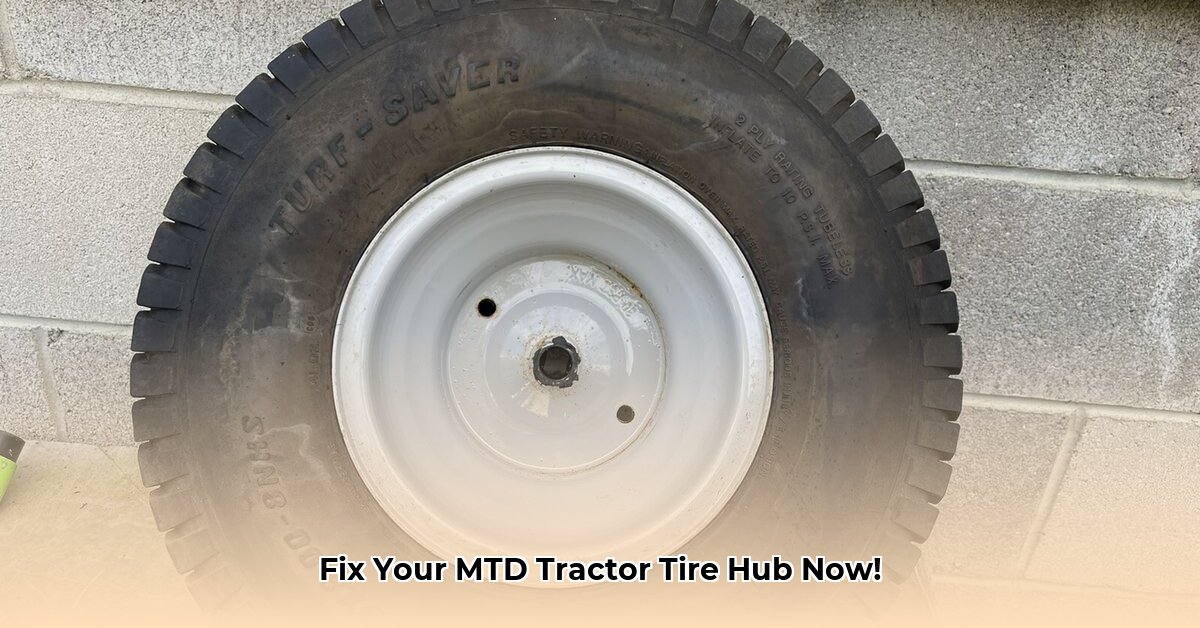
This guide provides a step-by-step approach to installing an MTD 20x8 tractor tire on its hub, incorporating troubleshooting tips and safety precautions. Remember, safety is paramount – if you're uncomfortable at any point, consult a qualified mechanic. For more detailed MTD tractor information, see this helpful guide.
Getting Started: Tools and Materials
Before you begin, gather these essential items:
- MTD 20x8 Tractor Tire and Hub Assembly: Ensure it's the correct fit for your specific MTD tractor model. Consult your owner's manual or the MTD website 1 for verification. Using the wrong tire can lead to performance issues or damage.
- Tire Iron or Wrench: For removing and tightening wheel nuts. Choose one that fits your tractor's wheel nuts precisely.
- Jack and Jack Stands: Essential for safely lifting the tractor. Never work under a raised tractor supported only by a jack.
- Lug Wrench: For securely tightening the wheel nuts.
- Air Compressor with Pressure Gauge: For inflating the tire to the correct pressure. Accuracy is key here.
- Wheel Chocks: Prevents the tractor from rolling during the installation process.
- Gloves: Protect your hands.
- Safety Glasses: Protect your eyes from debris.
Identifying the Correct Tire: Beyond "20x8"
The "20x8" designation might not be completely specific. MTD tractors, even within similar models, may have variations in tire specifications. Refer to your owner's manual or the MTD website 1 to confirm the exact tire size and any other critical specifications needed for your specific tractor model. Using the incorrect tire could severely impact performance and safety. Did you know that using the wrong tire can reduce fuel efficiency by up to 15%?
Step-by-Step Installation Guide
This process is straightforward but requires careful attention to detail. Each step is crucial for a secure and functional installation.
Safety First: Always engage the parking brake and securely wedge wheel chocks against the wheels that aren't being worked on. Use the jack to carefully lift the tractor, ensuring stable support with jack stands positioned firmly under the frame. Never work under a raised tractor without jack stand support. This is the most critical aspect of this entire process; nearly all accidents can be avoided by adherence to this precaution..
Removing the Old Tire (if applicable): Loosen the lug nuts on the old tire using the wrench. Once loosened, carefully remove the wheel assembly, keeping the nuts together.
Mounting the New Tire: Carefully align the new MTD 20x8 tire onto the wheel studs, ensuring proper seating and a flush fit against the wheel.
Initial Tightening: Hand-tighten the lug nuts, then use the lug wrench to tighten them in a star pattern (opposite nuts). This distributes pressure evenly and prevents warping.
Inflation: Inflate the tire using the air compressor to the pressure specified on the tire's sidewall. Overinflation can damage your tire, so use the gauge carefully.
Final Tightening: After inflation, tighten the lug nuts one final time in the star pattern, ensuring a secure fit.
Lowering the Tractor: Slowly lower the tractor using the jack. After the wheel touches the ground, give the lug nuts a final check to confirm their tightness.
Troubleshooting Common Problems
Here are some common issues and how to address them:
| Problem | Possible Cause(s) | Solutions |
|---|---|---|
| Tire won't mount easily | Misalignment, tight bead, excessive friction | Carefully realign, use soapy water to lubricate the bead. |
| Air leak | Damaged valve, puncture, weak tire bead | Inspect for damage, repair or replace as needed. |
| Lug nuts won't tighten | Stripped lug nuts, incorrect lug wrench, damaged wheel studs | Replace stripped nuts or studs; ensure correct wrench and wheel alignment. |
| Wheel wobbles or doesn't rotate freely | Bent wheel, damaged bearings, caliper binding | Inspect wheel for damage, check bearings, and ensure calipers aren't binding. |
Safety Precautions: A Final Reminder
Always prioritize safety. Jack stands are essential when working under a raised tractor. Wear safety glasses and work gloves. If you are uncertain about any step in this process, seeking professional help from a qualified mechanic is crucial.
Remember to consult your owner's manual for specific instructions and safety precautions relevant to your tractor model. This guide provides general guidance; your owner's instructions are paramount.